
Research
Royal Society honours Dal oceanographer for globally recognized climate research

One of Canada's highest academic honours goes to Dal oceanographer Dr. Katja Fennel for her globally recognized contributions to climate research. Read more.
Featured News

Monday, September 14, 2026
Enabling pharmacists to prescribe preventive Lyme disease medication shifted hundreds of routine cases out of emergency departments, easing pressure on the health-care system, shows a new 色妹妹直播 study.

Tuesday, September 8, 2026
As it enters a new era, the MacEachen Institute of Public Policy and Governance is expanding its efforts to connect researchers, decision-makers, and communities on pressing national and regional issues.
Thursday, August 20, 2026
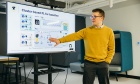
A new Dal-hosted research institute will connect researchers, students, partners and communities to advance AI research, learning and innovation rooted in Atlantic Canada.
Archives - Research
Friday, August 11, 2023
Involving youth in promoting health in schools can catalyze students鈥� ability to bring about positive change. On International Youth Day and year round, more adults could lift up youth voices, write Sara Kirk and Julia Kontak.
Wednesday, August 9, 2023
With the support of Mitacs Globalink and Research Nova Scotia鈥檚 Ukrainian Emergency Research Support Program, Bohdana Bila has been able to gain hands-on experience that she's excited to apply back in her home country.
Friday, August 4, 2023
In June, the possibility of synthetic embryos was announced at a conference. This allows some research to extend beyond the 14-day rule, which restricts experimentation on embryos beyond this period. Dal researchers Drs. Fran莽oise Baylis and Jocelyn Downie write about the ethical considerations at-hand.
Wednesday, August 2, 2023
With support from Dal Innovates, PureSpire Biomonitoring Technologies founder Dr. Crystal Sweeney aims to develop products that make a critical difference in reducing risks associated with occupational carcinogen exposure in firefighters.
Wednesday, July 26, 2023
Claire Boteler, a PhD candidate at 色妹妹直播, has developed a novel method for analysing ocean carbon data.