
Research
Royal Society honours Dal oceanographer for globally recognized climate research

One of Canada's highest academic honours goes to Dal oceanographer Dr. Katja Fennel for her globally recognized contributions to climate research. Read more.
Featured News

Monday, September 14, 2026
Enabling pharmacists to prescribe preventive Lyme disease medication shifted hundreds of routine cases out of emergency departments, easing pressure on the health-care system, shows a new 色妹妹直播 study.

Tuesday, September 8, 2026
As it enters a new era, the MacEachen Institute of Public Policy and Governance is expanding its efforts to connect researchers, decision-makers, and communities on pressing national and regional issues.
Thursday, August 20, 2026
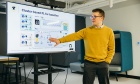
A new Dal-hosted research institute will connect researchers, students, partners and communities to advance AI research, learning and innovation rooted in Atlantic Canada.
Archives - Research
Wednesday, April 6, 2022
The April 12 Open Dialogue Live event 鈥淒ata and its Impact on Health鈥� will examine how data from the COVID-19 pandemic can be used to influence public policy and potentially mitigate risks should another pandemic occur.
Tuesday, April 5, 2022
The 2022 FASS Celebration of Research features works by dozens of faculty members, including articles, books, performances, productions, compositions, speaker series, and online symposiums 鈥� all covering a vast array of historic and contemporary topics of interest.
Monday, April 4, 2022
The Government of Canada has boosted several high鈥憆isk, high鈥憆eward research projects at Dal with New Frontiers in Research funding.
Monday, April 4, 2022
Susan Manning (Political Science) and J. Scott McCain (Biology) are this year's recipients. Learn more about their research and where it has taken them.
Tuesday, March 29, 2022
Apples found in the forests of Kazakhstan many millennia ago would stand in sharp contrast to the large, sweet, predominantly red fruit that fill grocery store shelves around the globe today, according to new Dal research.