

In September, 色妹妹直播 will offer Canada鈥檚 first Bachelor of Science in Ocean Sciences. The program will expand and enhance Dal鈥檚 international reputation as Canada鈥檚 oceans university. The program is designed to educate a cohort of scientists to participate actively in the field of ocean sciences.
鈥淐anada has one of the largest marine jurisdictions in the world and our ocean sector is growing,鈥� says Marlon Lewis, chair of the Department of Oceanography. 鈥淪ociety's most pressing ocean problems are interdisciplinary and often international in scope. Dal is responding to these realities by launching the BSc in Ocean Sciences and preparing scientists for what lies ahead.鈥�
 At the moment, Dal offers only听 MSc and PhD stand-alone degrees in Oceanography. At the undergraduate level, there are combined undergraduate honours degrees with Oceanography as the 鈥淏鈥� subject, as well as a double major with Environmental Science. The new BSc program offers a full suite of options for undergrads looking for a thorough, interdisciplinary education in ocean sciences, including concentrated honours, combined honours, major, double major and minor programs.
鈥淥cean Sciences students will dig into issues through more hands-on courses and labs, explore the ocean through a summer field class and have more opportunities to work with some of the world鈥檚 best ocean researchers,鈥� explains Paul Hill, Oceanography professor and chair of the committee that spearheaded the program.
鈥淚n Nova Scotia, 15 per cent of all jobs are tied to the ocean in some way,鈥� adds Dr. Hill. 鈥淭here are increasing opportunities to apply the latest scientific expertise to the ocean sector, and this degree gives undergrads a head start in taking advantage of them.鈥�
Enhanced opportunities
Ocean Sciences students will study the world鈥檚 oceans through courses in biology, chemistry, physics and geology of the ocean. They will also learn about ocean technology, policy, law and management. Dr. Lewis says that program graduates will be equipped to tackle major global issues after graduation.
鈥淭heir knowledge will facilitate the successful adoption of new marine technologies, such as tidal energy turbines,鈥� he explains. 鈥淭hey鈥檒l also play a critical role in understanding the consequences of the melting Arctic.鈥�
听
鈥淭here鈥檚 plenty for undergrads to learn,鈥� says Dr. Hill. 鈥淜nowledge of the oceans is expanding rapidly and there are increasing opportunities to apply science to the ocean sector.鈥�
Marine Biology student Stephanie Davis feels that an undergraduate degree in Ocean Sciences will help equip students to explore the world鈥檚 most mysterious depths.
鈥淲e know more about the surface of the moon than the depths of the ocean,鈥� she says. 鈥淭he ocean is incredibly mysterious.鈥�
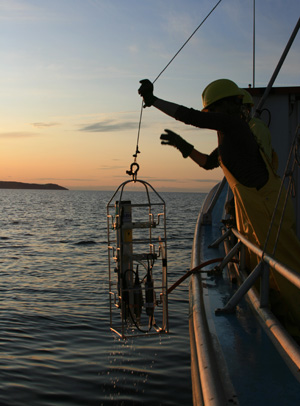
Exploring the enigmatic ocean waters requires knowledge of instruments used in the ocean sector. In the new second-year courses entitled 鈥淭ools and Concepts I and II,鈥� students will employ sophisticated ocean instruments to examine real-life problems. For example, light sensors will be used to study phytoplankton, photosynthetic microorganisms responsible for half the primary production on the planet.
Students will also gain knowledge of ocean history in order to make decisions about future management. In 鈥淥ceans and Global Change,鈥� students will examine projected changes in the marine environment, including sea level rise, storm surges and changes in ocean chemistry. 听
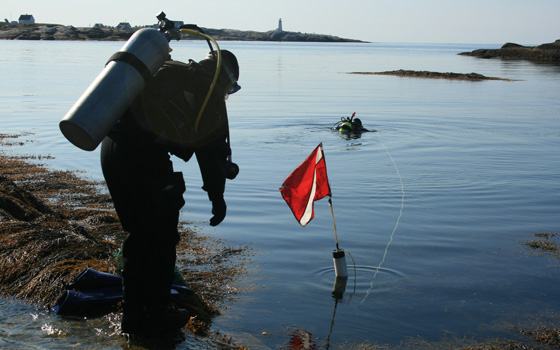
After they鈥檙e equipped with the knowledge and skills to study the oceans, students will put their abilities to the test during a summer field course. They will hone their research skills at sea, under the supervision of seasoned oceanographers.
Ocean leaders
Given the multidisciplinary nature of ocean sciences, students will have access to diverse research subjects and projects in the research-intensive Department of Oceanography.
鈥淩ight now we have honours students working on everything from carbon dynamics in the ocean to the stability of tidal flats to microplastic pollution in coastal ecosystems around Halifax Harbor,鈥� says Dr. Hill. 鈥淥cean Sciences students will have these same opportunities and more.鈥�
To Dr. Hill, the opportunity to learn from some of the best in the business is the program鈥檚 greatest asset.
鈥淭op oceanographers will be in the classroom with undergrads: that鈥檚 an unbeatable opportunity,鈥� he says. 鈥淲e鈥檙e putting our best teachers and researchers in front of these students so they can understand how what they learn applies beyond the classroom.鈥�
Dal President Tom Traves agrees that the program positions grads to help make Canada a global leader in ocean research and policy.
鈥溕妹弥辈� is setting the scale for ocean sciences in Canada and the world,鈥� he says. 鈥淭his program extends Dal鈥檚 reach by providing an avenue to educate and train the next generation of ocean scientists, managers and citizens.鈥�
The Bachelor of Science (BSc) in Ocean Sciences is a four-year program. To learn more or to apply, .