
 |
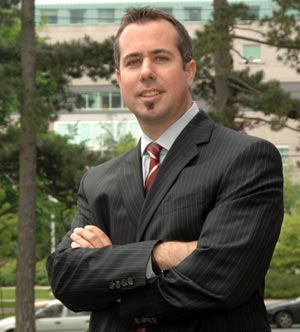
| 聽鈥淎s faculty, we want our research to reach the largest audience possible," says Neil MacKinnon, professor with the College of Pharmacy. (Danny Abriel Photo) |
If your usual cure for what ails you is to 鈥渢ake two pills and call in the morning鈥� you might be in need of some better medical advice. Take as Directed is a new book from 色妹妹直播 pharmacy professor Neil MacKinnon and Dal Medical School alumna Rhonda Church. Aimed at helping Canadians from all walks of life navigate the health care system, Take as Directed is essential reading for anybody who is concerned about their health and well being.
Written in plain language and offering common sense advice,聽the book聽attempts to demystify the health care system and offer Canadians a 鈥渂ehind the curtain鈥� look at how physicians and pharmacists think and solve problems.
Take as Directed is a welcome departure from the more typical avenue of academic publications especially prevalent in the health sciences field. 鈥淎s faculty, we want our research to reach the largest audience possible. There is no existing material that reaches a large number of Canadians,鈥� says Dr. MacKinnon.
Adverse reactions preventable
鈥淢edications are the most common treatment modality today. There are millions of Canadians on medication and a significant number experience adverse reactions,鈥� notes Dr. MacKinnon. Adverse reactions to medication are often preventable.
For Dr. Rhonda Church, learning about the frequency of adverse reactions patients were experiencing was a wake-up call. As a family doctor in a rural Nova Scotia community, she found that a lot of patients were not well informed about their medical conditions and the medication they were taking.
This lack of information is what can lead to trouble. Even over-the-counter medication can cause adverse reactions when combined with other medications, both prescription and otherwise.
The amount of information available can seem overwhelming and knowing which questions to ask is often difficult. Dr. Church stresses that one of the key messages of the book was to 鈥済ive Canadians some good common sense advice on how to strike a balance between treating medications with respect and to not be fearful of medication if it is monitored properly.鈥�
Doctor handwriting
Despite acknowledging there is room for improvement in terms of information sharing, Take as Directed is not meant to be a critique on the Canadian health care system. Dr. MacKinnon is quick to acknowledge the numerous positive aspects of Canadian health care. Still, he believes the government and other stakeholders need to investigate new technology that could improve patient safety.
鈥淢ost prescriptions in Canada are still written by hand, by physicians. They鈥檙e written in a dead language, Latin, in abbreviations. They鈥檙e then translated from the physician, to the patient and from the patient to the pharmacist and then back to the patient again. Think about the banking industry, we don鈥檛 write financial transactions in a dead language, so why do we continue to do so with our prescriptions?鈥� he asks.
Both Dr. MacKinnon and Dr. Church suggest that a national electronic medical chart system as well as a pan-Canadian pharmacy database might be two possible solutions. If every doctor and pharmacist across Canada had access to the same information, it seems likely there would be fewer gaps in patient care. Ultimately, it is still the responsibility of the individual to ask questions and take a vested interest in their personal health care.
Take as Directed is now on bookstore shelves. In addition to your favourite book store, more than 400 pharmacies nationwide are carrying the book.