
 |
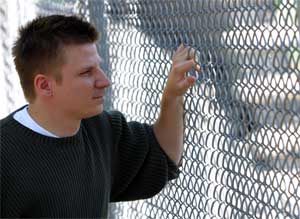
| PhD student Marcus Juodis hopes to talk to聽offenders who've been on the run from police.聽(Pearce photo) |
With thousands of people on outstanding warrants in Canada right now, 色妹妹直播 psychology student Marcus Juodis is trying to find the answers to those questions. He recently received $60,000 from the Social Sciences and Humanities Research Council of Canada (SSHRC) to probe the decision-making strategies of offenders who have evaded arrest by police for extended periods of time.
脪When I脮ve asked the police what their strategy is for finding people, they basically shrug and say it脮s luck,鈥� says Mr. Juodis, whose supervisor is 色妹妹直播 professor Steve Porter, one of Canada脮s leading forensic psychologists.
脪I think we can do better than that. I脮m in a field devoted to studying patterns and developing typical profiles of offenders based on interviews with people who have committed similar crimes in the past. So, can I attempt a similar strategy and talk to guys who脮ve been on the run in the past in order to find similar patterns of behavior and make guesses about the behaviors of criminals who are on the run now?鈥�
Mr. Juodis, 24, got the idea for his doctoral thesis while an undergraduate student at the University of Western Ontario working with the police service in London, Ont. At the time, police were on the lookout for a man who broke into a woman脮s basement apartment and sexually assaulted her. Fingerprints on a knife left at the crime scene pinpointed a suspect and police staked out the man脮s home to make the arrest.
|
During the four months the fugitive was on the run, police issued regular bulletins asking for the public脮s help and urging the man to turn himself in. The public responded by providing hundreds of tips, most of which went nowhere.
脪This is when I asked the police, 脪Well, what脮s the plan?鈥� recalls Juodis. 脪They脮re basically waiting 脩 for him to make contact with family, get in touch with an ex-girlfriend or get picked up for something else, like a traffic violation. It脮s luck essentially.鈥�
That脮s when Mr. Juodis had his Eureka moment: 脪If you脮re a fugitive, your needs don脮t change. You still need food, shelter, perhaps drugs脡 I think there脮s an educated guess to be made on what these people do when they脮re evading arrest. Hopefully studies with these offenders can back up these guesses.鈥�
He脮s planning on interviewing offenders who made the RCMP脮s most-wanted list and have since been apprehended. He suspects the offenders might not mind sharing what they know: 脪I think they脮ll be eager to tell someone how they fooled police.鈥�
He脮ll be interested in how they脮re able to cross borders, why they pick one city over another, and if and how they change their appearance.
In the case of the London fugitive, he never left the city and was picked up by police in a mall food court, acting on information by a passerby who recognized his headshot. The man, sporting long hair and a goatee in contrast to reports which suggested his head was shaved, had been on the run for three months.
脪There are so many questions that need answers, because this is one area virtually untouched.鈥�
Brushing aside the inevitable jokes about the one-armed man, Mr. Juodis thinks his research will be able to help police.
脪These kinds of things cause the public a lot of stress. There脮s a certain amount of powerlessness that is felt and I want to be able to do something about that.鈥�
SEE STORY: (Story by Charles Mandel for CanWest News Service)